 By Goldphil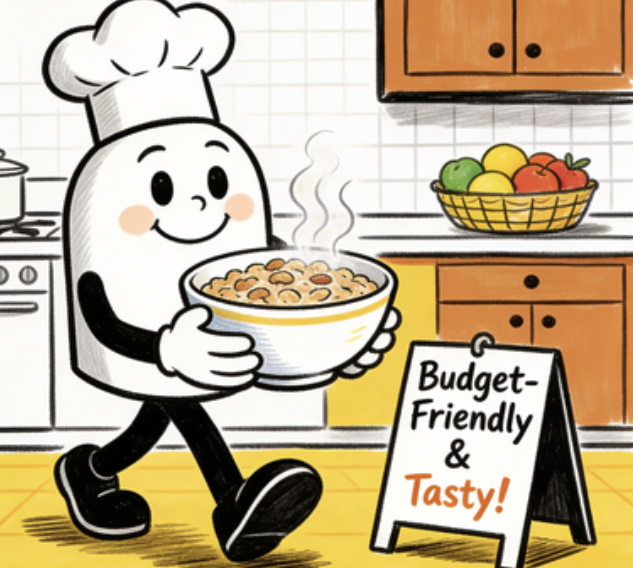
Breakfast cereal, once hailed as the “invention of the century” by its Victorian promoters, now faces a reckoning: a 2025 study found children’s varieties growing fatter in fat, sodium, and sugar content over decades, while protein and fiber dipped.foodandwine+1
Yet the quest for low-calorie options persists—not for nostalgia, but for practical reasons like satiety, convenience, and yes, affordability. This essay explores viable cereals that balance ≤150 kcal per realistic serving with palatability and thrift, drawing from dietitian recommendations, consumer tests, and market realities. Spoiler: store brands and unflavored staples dominate, proving “healthy” needn’t mean expensive or bland.
Outline: From Corn Flakes Utopia to Budget‑Friendly Reality
- Overview: Why low‑cal cereal matters (and why most “healthy” options fail the taste test)
- History: From health tonic to sugar bomb—how cereal lost its way
- Current Opinions: Dietitians vs. marketers on what “decent” really means
- Controversies: Ultra‑processed pitfalls and the illusion of “clean” labels
- Future Developments: Protein‑pumped, fiber‑fortified trends on a budget
A lighthearted dive into cardboard boxes that won’t bankrupt you or your taste buds.
Optional Banner Design
Conceptual minimalist vibe: A sleek wooden breakfast bowl overflowing with minimalist flakes (Cheerios‑like O’s and bran twigs) against a gradient sunrise backdrop. Subtle calorie counter overlay (90 kcal glowing green) and price tag (“$0.10/serving”) float ethereally. Style: clean photorealism with vector accents, evoking wholesome simplicity amid abundance.
1. Overview: The Elusive Trifecta of Low-Cal, Tasty, Cheap
Low‑calorie cereals promise volume without caloric guilt—ideally ≤120–150 kcal per 1–1.5 cup serving, with fiber ≥5g to sustain you past 10 a.m. But “taste decent” is subjective: sweet enough to enjoy plain, yet not a sugar trap. “Affordable” means ≤$0.15–0.20 per serving in family‑size boxes, favoring generics over boutique brands.
From dietitian lists and user forums, winners share traits: whole grains, minimal sugar (≤5g), high fiber, and neutral profiles that pair well with fruit or yogurt.loseit+5
Contenders like Cheerios and bran flakes emerge repeatedly—not revolutionary, but reliable.
2. Historical Background: From Digestive Aid to Dietary Dilemma
Cereal’s arc mirrors America’s health obsessions. In 1863, James Caleb Jackson invented “Granula”—hard bran biscuits for dyspeptic sanatorium patients, soaked overnight.wikipedia+3
- 1890s Revolution: John Harvey Kellogg dextrinized wheat into flakes for easier mastication at his Battle Creek Sanitarium, birthing Corn Flakes in 1906 (via brother Will’s sweeter tweak).wikipedia+2
- Marketing Boom: C.W. Post’s Grape‑Nuts and Quaker’s Puffed Rice positioned cereal as convenient “health food,” exploding sales amid urbanization.
- Sugar Shift: By the 1950s–70s, mascots and prizes masked rising sugars; today’s kids’ cereals pack 45% of daily sugar limits per bowl.chosun+2
Low‑cal variants like plain Cheerios (1941) hark back to origins—unadorned grains—while bran cereals nod to Kellogg’s fiber fixation.
3. Current Opinions: Dietitians Weigh In on Palatable Picks
Experts converge on simplicity over novelty. Registered dietitians from Nourish, Lose It!, and BBC Good Food endorse unflavored staples for their fiber density and low processing.bbcgoodfood+4
Top consensus picks (per serving ≈120–150 kcal, <$0.20/serving in bulk):fastic+3
| Cereal | Kcal (serving) | Fiber (g) | Sugar (g) | Why It Works |
|---|---|---|---|---|
| Original Cheerios | 90–140 (1–1.5 cups) | 4 | 1 | Neutral oat base; voluminous; pairs endlessly. |
| Corn/Wheat Flakes (store brand) | 110–120 | 2–3 | ≤2 | Crunchy, cheap; fruit elevates it. |
| Fiber One Original Bran | 90 (⅔ cup) | 18 | 0 | Ultra‑filling; sprinkle sparingly. |
| All‑Bran / Complete Bran | 120 | 10–12 | 6–8 | Wheat depth; satisfying chew. |
| Rice/Corn Chex | 140–160 | 2 | 2 | Light, airy; great mixer. |
User sentiment (Reddit/forums): “Cheerios + berries is my hack”; “Bran flakes taste better than expected once you ditch milk.”reddit+1
Critics note generics match name brands nutritionally at half the price.
4. Controversies: Ultra‑Processed Traps and Marketing Mirage
Cereal’s halo has tarnished. A 2025 analysis revealed kids’ varieties fattening up—fat +33%, sodium +32%, fiber -23% since the 1980s—amid obesity lawsuits against Nestlé et al.nypost+2
- Health Claims vs. Reality: “Heart healthy” labels (e.g., Cheerios) hold for plain versions, but flavored kin load sugars.
- Ultra‑Processed Debate: Even “low‑cal” options like flakes are extruded grains—nutrient‑stripped, additive‑heavy. RFK Jr.’s 2025 push against artificial dyes flags cereals broadly.nypost
- Budget Trap: Premium “protein” cereals (e.g., Kashi GO) cost 2–3x more per kcal, often with artificial sweeteners.
Perspective: Low‑cal doesn’t equal “clean”; prioritize fiber over labels.
5. Future Developments: Smarter, Greener, Gut‑Focused Grains
Cereal’s next chapter pivots to functionality amid declining consumption (global drop tied to health awareness).chosun
- Protein & Gut Boom: Expect 20g+ protein/serving with pea/rice blends; prebiotic fibers (inulin, chicory) for microbiome marketing.
- Sustainable Shifts: Upcycled grains (e.g., barley husks) cut costs/calories; plant‑based milks bundled in “kits.”
- Personalization: AI‑scanned nutrition profiles yield custom low‑cal mixes.
Budget angle: Store brands will mimic these at fraction of premium prices, keeping accessible options viable.
Synthesis: Choose Wisely, Eat Mindfully
Low‑cal cereal endures not as panacea, but pragmatic staple—its history a cautionary tale of health‑to‑hedonism, its present a battleground of labels vs. labels. Opt for Cheerios, bran flakes, or Chex: they deliver satiety sans fortune, tasting “decent” through clever pairings.
Perspective shift: View cereal as canvas, not centerpiece. In a future of fortified frugality, the humble flake reaffirms simplicity’s enduring appeal.
- https://www.foodandwine.com/cereal-low-nutritional-content-study-11755001
- https://nypost.com/2025/05/22/health/kids-breakfast-cereals-are-getting-unhealthier-study-finds/
- https://www.loseit.com/articles/the-lowest-calorie-cereals/
- https://www.bbcgoodfood.com/review/the-best-healthy-cereal-tried-and-tested
- https://www.usenourish.com/blog/high-fiber-cereal
- https://therealfooddietitians.com/the-best-cereals-to-buy-according-to-dietitians/
Related articles:
 What is a Calorie in Food? An Expert Guide to Calculating Your Personalized Daily Needs
 Small Muffin Calories: The Ultimate Guide to Costco’s New 8-Pack and Mini Favorites
 Ariana Grande Diet Plan 2025: Her Plant-Based Secrets, Realistic Weight Loss Truth, and What She Really Eats
 Zendaya Workout Routine 2025: Realistic Daily Schedule, Challengers Training, Weight & Wellness
 Food Encyclopedia 2025: Ultimate Guide to Quizzes, PDFs, Books, Recipes, Healing Powers & Global Foods
 Small Muffin Calories 2025: Exact Counts for Mini, Chocolate Chip, Costco & Weight Loss Guide